
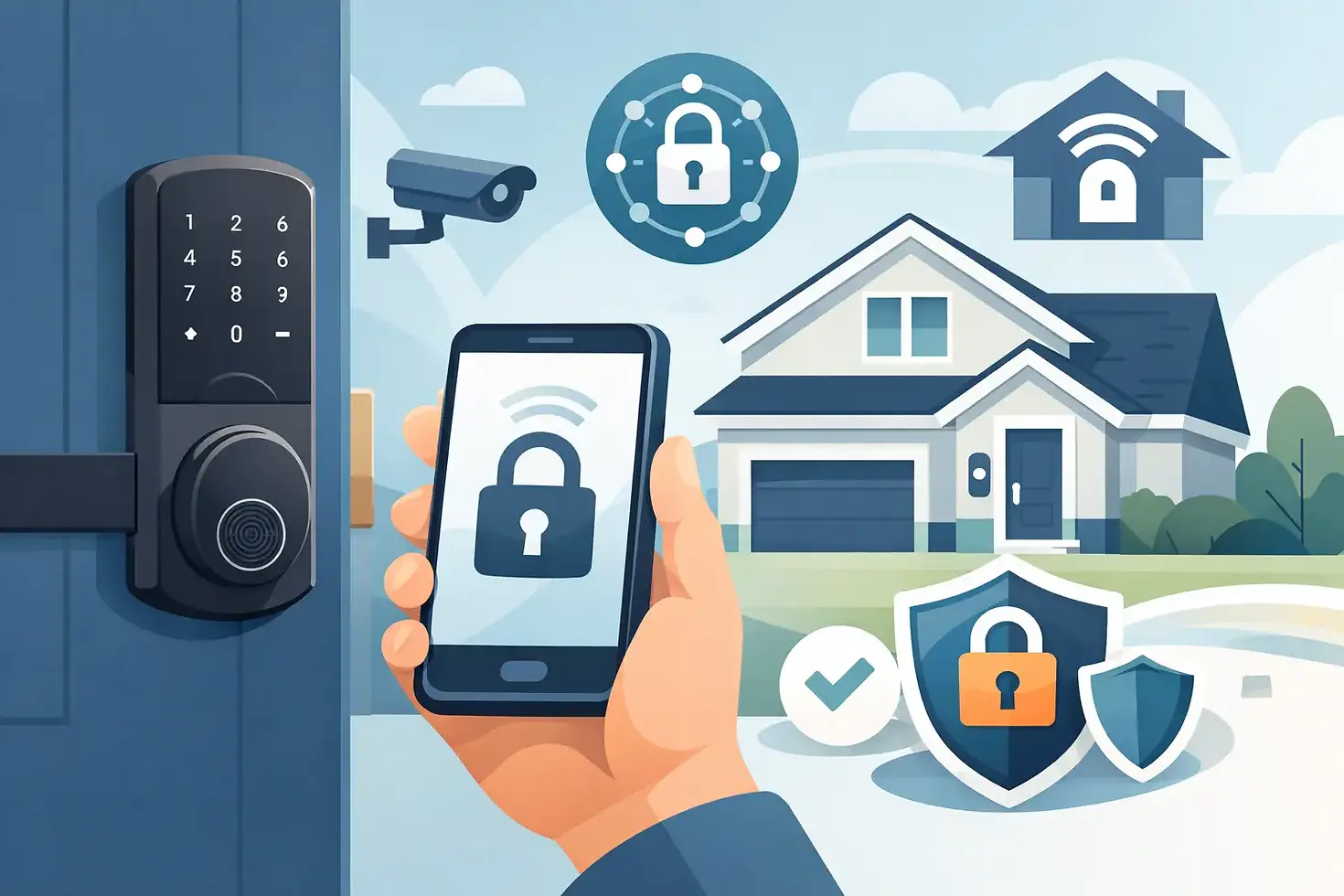
Are Smart Locks Secure? A Homeowner’s Guide

A smart lock should make arriving home feel simpler, not leave you wondering whether convenience has come at the expense of security. So, are smart locks secure? When the lock is well chosen, correctly fitted and sensibly managed, it can provide a highly secure and practical addition to a modern home. The key is to view it as part of the wider security of your door and property, rather than a gadget working in isolation.
Are smart locks secure for UK homes?
Smart locks can be secure, but their performance depends on three things: the quality of the lock itself, the security of the door it is fitted to, and the way access is managed after installation. A premium smart lock with encrypted communication and secure authentication can reduce common risks such as lost keys, copied keys and forgotten locking routines. It can also give homeowners useful visibility over who has entered the property and when.
However, digital security does not replace physical security. A smart lock fitted to a weak door, an unsuitable cylinder or a poorly aligned multipoint locking system will not deliver the level of protection most homeowners expect. The strongest approach combines a reputable lock, a sound mechanical door setup, secure network practices and professional installation.
For many households, the appeal is not simply keyless entry. It is the ability to grant temporary access to a cleaner, dog walker, tradesperson or family member without handing out a permanent key. When that access is no longer needed, it can be removed immediately. That level of control is valuable, particularly for busy families and second-home owners.
The security features that genuinely matter
Not every smart lock uses the same technology or offers the same safeguards. It is worth looking beyond a stylish finish or a long feature list and focusing on the protections that affect everyday security.
Encrypted communication
A secure smart lock protects communications between the lock, phone, keypad, hub and any associated smart home system. Encryption makes it far more difficult for someone to intercept or reproduce the signals used to operate the lock.
Bluetooth, Wi-Fi and other wireless protocols each have different strengths. Bluetooth locks can work directly with a phone at close range, while Wi-Fi-connected systems offer remote access and alerts. Neither option is automatically safer than the other. What matters is that the product uses current security standards, is supported with regular software updates and is configured properly.
Strong account protection
Your smart lock is only as secure as the account controlling it. A unique, long password and two-factor authentication should be standard practice wherever available. Two-factor authentication means that knowing a password alone is not enough to change settings or gain account access.
Avoid sharing one master login across the household. Instead, create individual user access for family members and trusted visitors. This keeps the audit trail clear and means access can be removed for one person without disrupting everyone else.
Controlled access codes and permissions
Keypads and app-based access make it possible to create unique codes for different people. A family member may have ongoing access, while a guest or service provider can have a code that works only at set times or expires after a defined period.
This is more secure than leaving a spare key under a plant pot or circulating unlabelled copies of a front-door key. It also gives you a clear record of entry events, where your chosen system supports activity notifications.
Reliable physical locking
The digital element receives much of the attention, but the physical lock remains fundamental. For a front or back door, check whether the smart lock works with your existing multipoint lock, mortice lock or cylinder arrangement. The system should fully engage the door’s locking points rather than merely controlling a latch.
On doors using a Euro cylinder, the cylinder and security furniture should be suitable for the door and the property’s requirements. In some circumstances, insurance providers may specify particular standards for external doors, including BS 3621 or equivalent security requirements. It is sensible to check your policy before changing the locking arrangement.
Where smart lock security can fall short
Smart locks are not immune from risk, and honest advice should acknowledge the trade-offs. Lower-quality products may have limited update support, weaker account controls or poorly designed apps. A lock that is no longer receiving security updates is less reassuring than one backed by an established manufacturer with a clear support process.
Home Wi-Fi also deserves attention. If a lock connects to your network, use a strong router password, keep the router firmware updated and avoid using old or insecure wireless settings. A dedicated guest network can be useful for certain connected devices, depending on the wider smart home design.
There is also a practical consideration: batteries. Most smart locks provide low-battery alerts well before power runs out, but those alerts must not be ignored. Choose a lock with a clear emergency power option, mechanical key override or other planned method of entry. The right choice depends on the door, household routines and whether the property is occupied full time.
Convenience can create risk if access is not reviewed. A code given to a builder during a renovation should not remain active indefinitely. Review users after house moves, completed works, staff changes or alterations to family arrangements. This takes minutes but makes a meaningful difference.
Professional installation is a security feature
A smart lock must fit the door accurately to operate as intended. On a uPVC or composite door with multipoint locking, for example, alignment affects whether hooks, rollers or bolts engage correctly. If the door needs lifting or excessive force to lock, adding technology will not solve the underlying mechanical issue.
Professional installation begins with assessing the door type, existing hardware, lock compatibility and how the household wants to use the system. It also considers power, network coverage, emergency access and integration with other home technology. For a larger smart home project, a lock can work alongside intelligent lighting, video entry, gate control, alarms and tailored Control4 automation to create a more considered arrival and departure experience.
The result should feel straightforward. You may be able to check that the door is locked before bed, receive a notification when children arrive home, or create a temporary code for a visiting relative. Behind that simplicity should be careful setup, tested operation and a secure handover process.
Giffords Electrical approaches smart home security as part of the property’s wider electrical and technology infrastructure, helping homeowners make decisions that suit both the building and the way they live.
Choosing the right smart lock for your door
Before selecting a lock, establish whether you need a retrofit solution or a complete replacement. Retrofit locks can be a strong option where you want to retain an existing quality cylinder and traditional key access. Full replacement solutions may offer a more integrated appearance and additional features, but compatibility must be confirmed carefully.
Consider who will use the lock. A household with young children may prefer a keypad and simple entry codes. A frequent traveller may value remote status checks and scheduled access. A property with elderly relatives may need a familiar mechanical override alongside digital convenience. There is no single best option for every door.
It is also worth considering what happens when technology is unavailable. Ask how the lock operates during a phone battery failure, broadband outage or low lock battery. A well-planned system provides a clear, secure fallback rather than leaving residents dependent on one method of entry.
A smarter approach to everyday peace of mind
The most secure smart lock is not necessarily the one with the most features. It is the one that suits your door, has dependable physical credentials, receives ongoing support and is configured around the people who need to use it. Good installation turns those elements into a reliable part of daily life.
Before committing to a smart lock, have your existing door, locking mechanism and access requirements assessed together. That small step helps ensure that the convenience you add is matched by the security and reassurance your home deserves.


Comments