
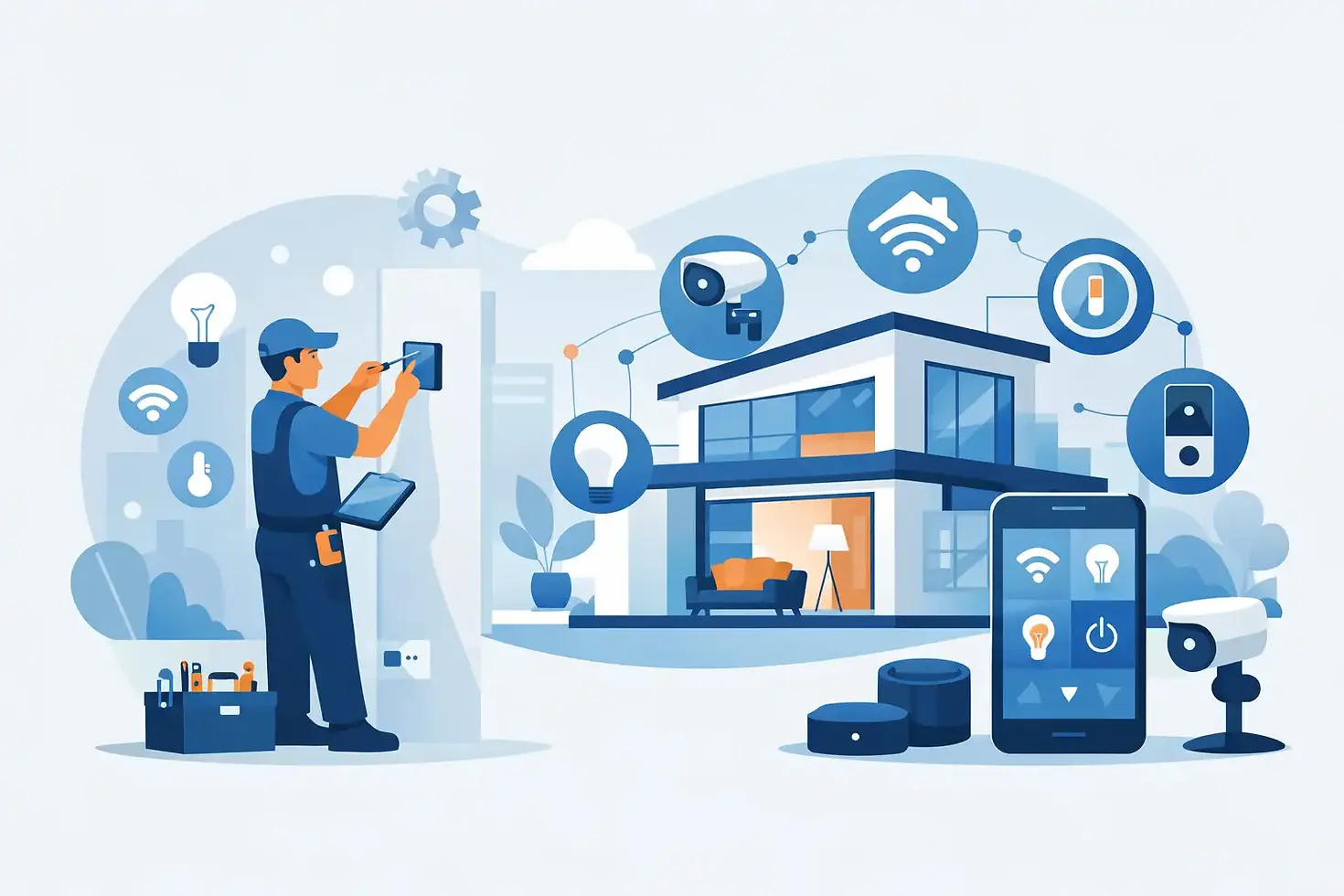
Smart Home Installation Services Explained

A smart home should feel effortless the moment you walk through the door. Lights respond the way you expect, heating suits your routine, security gives you confidence when you are away, and everything works together without constant fiddling. That is where smart home installation services make the difference. The right system is not just about adding gadgets - it is about designing a home that is easier to live in, safer to manage and simpler to control.
What smart home installation services really cover
Many homeowners first think of app-controlled lights or a video doorbell when they hear the term smart home. In practice, a professional installation can go much further. It can bring together lighting, heating, security, audio, entry systems and centralised control so the home behaves as one connected environment rather than a collection of separate products.
This matters because smart technology is only as good as the way it is planned and installed. A beautifully renovated kitchen can be let down by poor switch placement. A strong security setup can become frustrating if notifications are unreliable or if cameras and alarms are not properly integrated. Professional smart home installation services focus on the detail that makes technology feel natural in everyday life.
For some households, that means a single room with intelligent lighting and discreet audio. For others, it means a whole-home system built around a platform such as Control4, where multiple devices and functions are managed from one place. The scope depends on the property, the goals of the client and the level of future flexibility required.
Why professional installation matters
There is no shortage of off-the-shelf smart devices, and some are perfectly suitable for simple upgrades. If you want one smart plug in a study or a standalone speaker in the kitchen, a DIY route may be enough. The problem starts when separate products need to work together consistently, securely and without compromise.
A professionally installed system addresses three things at once: infrastructure, integration and compliance. The infrastructure side covers the electrical backbone of the property, including safe supplies, suitable cabling, fuseboard capacity and the practical realities of refurbishment or new-build work. Integration is the part that turns individual components into one joined-up experience. Compliance ensures the work is installed to the expected standard by a qualified electrical contractor.
That combination is especially valuable during renovations and extensions. It is far easier to plan intelligent lighting circuits, hidden cabling, control panels and security positions before the plastering is finished than to retrofit everything later. Good design at the beginning prevents awkward compromises at the end.
Smart home installation services for lighting, security and control
Lighting is often the feature that changes how a home feels the fastest. A well-planned intelligent lighting scheme does more than switch fittings on and off. It allows scenes for cooking, entertaining, relaxing and bedtime, while also improving energy efficiency and convenience. The difference between a room full of harsh overhead light and a layered lighting design is immediate.
Security is another area where professional installation earns its place. Cameras, alarms, video door entry and remote monitoring can all be integrated into a single system, giving homeowners a clearer picture of what is happening at home whether they are inside or away. The best systems do not overwhelm you with alerts. They provide useful information, dependable access and a greater sense of control.
Centralised control ties the whole experience together. Instead of juggling multiple apps, remotes and wall controls, a tailored system creates one consistent way to manage the home. That could mean elegant keypads, touchscreen interfaces or simple automation that runs quietly in the background. Convenience is the obvious benefit, but consistency is just as important. People use technology more confidently when it behaves predictably.
A tailored system is better than a bigger system
One of the most common misunderstandings in this sector is that more technology automatically means a better result. In reality, the best smart homes are carefully matched to the people living in them. A family with young children may prioritise security, heating schedules and lighting scenes that support busy mornings. A homeowner focused on entertaining may care more about audio distribution, outdoor lighting and flexible mood settings. A self-build client might want the infrastructure in place now, with room to expand later.
That is why the design stage matters so much. A good installer does not begin with a catalogue of products. They begin with how the home is used. Which rooms need the most flexibility? Where are the pain points in day-to-day routines? What needs to be intuitive for guests, children or older relatives? These questions shape a system that feels sophisticated without becoming overcomplicated.
There are always trade-offs. Wireless solutions can be ideal in existing homes where disruption needs to be kept to a minimum, but wired elements may offer stronger long-term reliability in larger or more complex properties. A whole-home platform can deliver a more refined experience, though it may be more than some households need in every room. The right answer depends on the property and the outcome you want.
The value of using one provider for electrical and smart technology work
This is where homeowners often gain the greatest practical benefit. When standard electrical works and smart installation are handled together, the project usually runs more smoothly. You are not trying to coordinate separate contractors for rewires, fuseboard upgrades, new sockets, lighting circuits and automation controls. The result is a more coherent plan and fewer gaps between the electrical foundation and the final smart features.
That joined-up approach is particularly helpful in older properties. Many attractive homes across Oxfordshire, Surrey, Wiltshire, the Thames Valley and Berkshire were not built with modern connected living in mind. Upgrading them properly may involve improving the underlying electrics first, then layering in smart control, lighting and security in a way that respects the property while bringing it up to date.
Working with a qualified, NICEIC-registered electrical contractor also gives clients reassurance that the work is not only stylish and convenient, but safe and compliant. That confidence matters. Home technology should enhance day-to-day living, not create uncertainty about whether it has been installed correctly.
What to expect from the installation process
The process should feel clear from the outset. It usually begins with a conversation about the property, your priorities and how you want the finished system to work. Some clients arrive knowing they want Control4 or a full integrated solution. Others simply know they are tired of disconnected devices and want a more polished result.
From there, the design takes shape. This can include lighting layouts, control methods, equipment locations, cable planning and decisions around future expansion. In refurbishment projects, it may also involve reviewing the existing electrical setup to see what should be upgraded before smart features are added.
Installation is only one part of the job. Commissioning and fine-tuning are just as important. Scenes need to be programmed properly, devices need to communicate reliably and the finished system needs to make sense for the people using it. Ongoing servicing also has value, especially for more advanced setups, because even the best technology benefits from expert support over time.
Choosing the right smart home installation services
The right partner should understand both the technical and practical side of the project. They should be able to talk about circuits, compliance and integration with confidence, but also explain how those decisions improve comfort, convenience and peace of mind. That balance matters more than flashy terminology.
Look for an installer who treats the home as a complete environment rather than a set of isolated products. Smart lighting should work with the architecture of the room. Security should fit the way the household moves through the property. Control should feel intuitive rather than impressive for its own sake.
It is also worth choosing a provider who can scale the solution appropriately. Not every project needs a full home transformation from day one. Sometimes the most sensible route is to start with core areas such as lighting, security or centralised control, then expand when the timing is right. A thoughtful installer will help you plan for that rather than forcing a one-size-fits-all approach.
For homeowners who want a more refined living experience, smart technology works best when it is properly designed, installed and supported. The goal is not to fill your home with gadgets. It is to create a home that responds better, feels more secure and works harder in the background, leaving you to enjoy it.


Comments